Teaching Kids Programming: Videos on Data Structures and Algorithms

The Golden Ratio, in mathematics, is often denoted using the symbol 







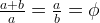
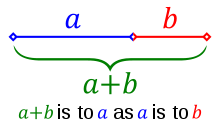
Two line segments (lengths are a and b, respectively) are said to be in golden ratio if the lengths satisfy the following.


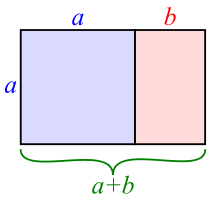
Similarly, the golden rectangle should meet the following:

We all know that the Fibonacci numbers are defined as:


for 

and 

The ratio between the number in the series and its successor tends to converge to
For example, any three continuous numbers in the series can be defined as b, a, b + a.
Therefore, we find that, the ratio between the first two and the last two numbers are


Let’s verify this in a small Python code via computing the first 20 numbers of the Fibonacci Sequences.
#!/usr/bin/env python

a = 1
b = 1
N = 20

for i in range(N):
    a, b = b, a + b
    print(b * 1.0 / a)
Let’s observe the output and we can see the Estimation of the Golden Ratio converges pretty fast.
2.0
1.5
1.66666666667
1.6
1.625
1.61538461538
1.61904761905
1.61764705882
1.61818181818
1.61797752809
1.61805555556
1.61802575107
1.61803713528
1.61803278689
1.61803444782
1.6180338134
1.61803405573
1.61803396317
1.61803399852
1.61803398502
References:
http://en.wikipedia.org/wiki/Golden_ratio
–EOF (The Ultimate Computing & Technology Blog) —
Last Post: How to use align-data-move SSE in Delphi XE3 ?
Next Post: GetThreadID and GetProcessID from TIB